Most people enter the water at Pigeon Island looking for colour and movement. That is natural. Fish, turtles and the odd reef shark are easy to point at. A healthy reef is quieter to read. It shows in structure, in which fish are working, and in whether the hard surfaces still look occupied by living coral rather than only by algae or rubble.
I am Sas. I organise boat trips from Nilaveli. I also studied microbiology, so when I look at a reef I am not only counting animals for guests. I am checking whether the system still has the balance it needs to keep growing. This note is about what that balance can look like in the water — not a sales pitch, and not a guarantee of what any one morning will show.
Sea conditions, visibility and marine life change from day to day. Nothing below is a promise of what you will see on your date.
Come as a guest. Leave as a friend.
Why “healthy” is not the same as “pretty”
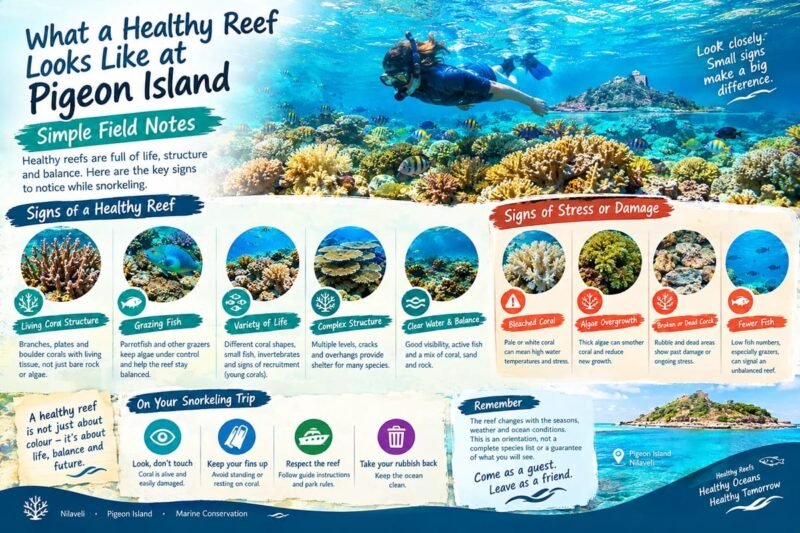
Clear water helps photography. It does not always mean the reef underneath is doing well. A pretty patch can still be stressed if algae is taking over the hard surface, if the fish that keep algae down are missing, or if large areas have turned to loose rubble after storm or heat stress.
At Pigeon Island the useful question on a snorkeling morning is simpler: is living coral still holding the structure, and are the small workers of the reef still present?
That is the angle of this post. It belongs with our marine conservation notes — practical observation, not a brochure for a tour package.
Signs worth noticing in the water
Living structure, not only colour
Coral is an animal that builds a calcium home. When the animal is alive, the surface often looks occupied — textured, sometimes slightly slimy with the film of life, not only smooth dead stone. Branches and plates that still have living tissue matter more than a single bright fish swimming past.
Some areas recover slowly after damage. You may see mixed zones: living colonies next to pale or broken sections. That mix is honest. A well-managed reef is not a painted garden. It is a working surface that has good years and hard years.
Grazing fish as the cleanup crew
Herbivorous fish — parrotfish and similar grazers — keep algae from smothering coral that is trying to settle or grow. When those fish are active on the rock and coral, the reef has a better chance of staying in balance.
If the hard bottom is thick with green film and few grazers are visible, the system is under more pressure. Guests often look only for “big” animals. The small workers are part of what a healthy reef looks like at Pigeon Island.
Space for small life
A reef that still has cracks, overhangs and varied height gives shelter to juveniles and invertebrates. Flat rubble fields offer less of that. You do not need to name every species. You can notice whether the underwater landscape still has complexity or whether large stretches have been reduced to one texture.
Connection beyond the island
What happens on the reef is linked to the wider coast — lagoon edges, seagrass where it remains, and how much stress arrives from land and boats. Pigeon Island sits inside a marine national park for a reason. Rules about entry, anchoring and behaviour exist because the structure cannot absorb unlimited pressure.
How this changes a normal snorkeling morning
On a typical Pigeon Island trip from Nilaveli, time in the water is limited. Guides point out what is safe to approach and what to leave alone. If you want to use that time to read the reef, not only to chase a single turtle, try three habits:
- Look at the hard surface first — living texture versus bare or algal cover.
- Notice whether grazing fish are working the rock.
- Keep fins up and hands off. The best photo is not worth breaking a colony.
I will still talk about turtles, reef fish and blacktip reef sharks when they appear. Sightings are never guaranteed. The reef’s condition is a longer story than any one animal.
This way of looking also keeps the commercial tour page in its proper role. The booking page explains the trip, timing and practicalities. These notes explain what “healthy” can mean when you are already in the water.
What this post is not
- Not a promise of crystal visibility every day
- Not a list of animals you are certain to meet
- Not a claim that Pigeon Island is untouched or perfect
- Not a substitute for park rules or guide instructions
If conditions are poor, we say so before you commit. That honesty is part of how we work from this coast.
FAQ
Living coral still holding structure, grazing fish keeping algae down, and varied underwater shape rather than only flat rubble — always subject to the day’s conditions.
Yes. You can notice living texture versus bare rock, and whether small fish are actively feeding on the surface of the reef.
Poor technique can. Standing on coral, kicking colonies, and chasing animals too closely add stress. Guided, careful snorkeling is designed to reduce that.
Storms, past heat stress, and physical damage all leave marks. Some patches recover; some remain mixed for a long time.
No. This is an observation and awareness note. Trip details, timing and booking sit on the Pigeon Island tour page.
No. Marine life and visibility change with weather, season and chance.
Explore more from our Nilaveli base →
Pigeon Island snorkeling trip details →
Whale and dolphin open-sea mornings →
More local guides and stories from our content hub:
Pigeon Island Guides & Memories —
Angel Rock & Local Snorkeling —
Whale & Dolphin Stories —
Fishing Experiences —
Marine Conservation & Reef Protection —
Lagoon Nature & Practical Guides —
Local Stories & Trincomalee History —
Taste of Nilaveli —
Notes from Sas — Snorkeling in Nilaveli Islands, Nilaveli, Trincomalee.