Bird watching in Trincomalee is not only about the beach or the open sea. North of the main harbour towns, toward the district border with Mullaitivu, Kokkilai Lagoon holds a different kind of day — brackish water, mudflats, mangrove edges and, in season, concentrations of waterbirds.
I am Sas. I work from Nilaveli. Most of our guests come for reef or open-sea trips. Some ask about birds. This note is for that question: what the protected lagoon is under Sri Lankan law, what the habitat supports, and what you can realistically expect if you plan time there.

Official status of Kokkilai Sanctuary
Kokkilai Lagoon and surrounding land were designated a bird sanctuary on 18 May 1951 under the Fauna and Flora Protection Ordinance (No. 2 of 1937). The site is administered by the Department of Wildlife Conservation (DWC) of the Government of Sri Lanka.
It is classed as an IUCN Category IV area — a habitat and species management protected area. Published figures put the current sanctuary area at about 1,995 hectares (roughly 20 km²). Earlier records listed a larger figure of about 2,995 hectares; the smaller current figure is the one commonly cited in protected-area lists.
The lagoon itself spans parts of Mullaitivu District and Trincomalee District. The settlement of Kokkilai sits on a sand bar between the lagoon and the Indian Ocean. For visitors based in Nilaveli or Trincomalee, that means a road journey north — not a short hop from the main beach strip.
Under Sri Lanka’s sanctuary rules, wildlife is protected. Hunting, killing or removing wild animals, destroying nests or eggs, and disturbing animals are prohibited. Entry permission is generally not required for sanctuaries in the same way as for some national parks, but behaviour on the water and shore still matters. Local access, boat use and any temporary restrictions should be checked for your dates.
What the lagoon is like
Kokkilai is an estuarine lagoon. It is fed by small rivers, including the Churiyan Aru, and connects to the sea through a narrow channel that is often blocked by a sand bar. Water is typically brackish. Maximum depth is reported around four metres in published lagoon descriptions.
Habitat types that matter for birds include:
- Shallow open water and mudflats
- Sea grass beds
- Small areas of mangrove swamp
- Surrounding scrub, open forest and cultivated land
Shallow feeding grounds are why waterbirds concentrate here. Bird watching in Trincomalee that points to Kokkilai is really about this mix of lagoon, flats and edge vegetation — not a forest trail alone.
Birds and migration along the east coast
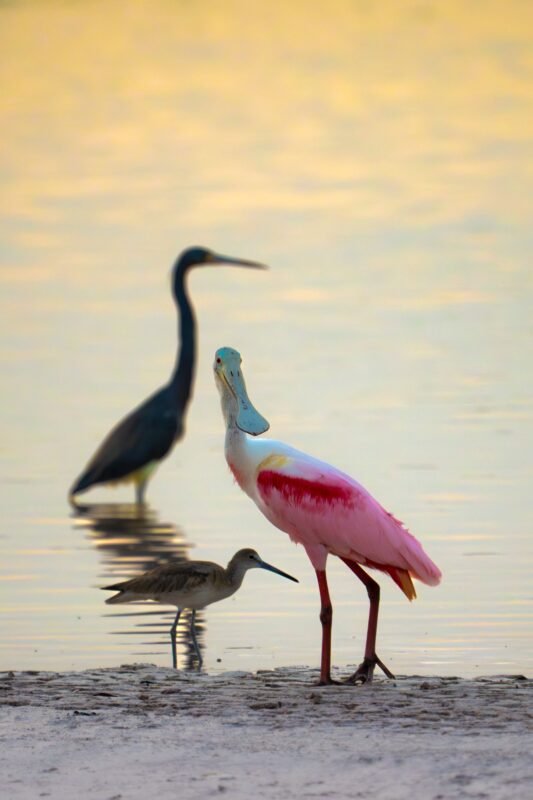
Published descriptions of the sanctuary list groups commonly associated with the site: cormorants, ducks, egrets, flamingos, herons, ibis, pelicans, storks and other waders. The lagoon is described as part of the east-coast migration route for waterbirds moving along Sri Lanka’s shoreline.
Migratory pressure is stronger in the cooler months. Many visitors and local observers treat roughly November to April as the period when migrant numbers are more noticeable. That is a planning window, not a fixed calendar of guaranteed flocks. Rain, water level, sand-bar opening and fishing activity all change how the flats look from one week to the next.
I do not list rare species as if they appear on cue. Black-necked stork and other less common birds are reported from this coast in specialised notes; that does not mean every boat morning produces them. The honest version of bird watching in Trincomalee at Kokkilai is that the lagoon decides.
Important history and protection news (factual)
A few public facts help explain why the site needs careful use:
2010 clearance
Reports from that period describe illegal deforestation affecting a large area of the sanctuary, with the destruction of large numbers of weaver-bird nests. Encroachment and habitat loss remain a live concern for any wetland next to settlements and cultivation.
Post-war park proposals
After the end of the civil war, the government announced plans to convert several Northern Province sanctuaries into national parks. On 22 June 2015, four new national parks were created in the Northern Province. Kokkilai remained a sanctuary — it was not upgraded to national park status in that round.
2014 environmental assessment
An Integrated Strategic Environmental Assessment for the Northern Province, prepared with government, UNDP and UNEP input and published in October 2014, recommended extending Kokkilai sanctuary northwards to include Nai Aru Lagoon. That recommendation is part of the public planning record; implementation is a separate question.
2015 fisheries order
By Extraordinary Gazette in July 2015, Kokkilai Lagoon areas in specified Grama Niladhari divisions of Mullaitivu and Trincomalee were designated a Fisheries Management Area under the Fisheries and Aquatic Resources Act. The lagoon is therefore not only a bird site; it is also a working fisheries space. Visitors share the water with local use.
These points are not tourism slogans. They explain why quiet boat behaviour, respect for local rules and realistic expectations matter when people ask about bird watching in Trincomalee.
Timing and practical approach
Quiet boat time works better when birds are more active and light is softer — often early morning or later afternoon.
A slow boat through channels and along flats is the usual way to move without pushing wildlife hard. Speed and noise work against the point of the visit. Binoculars help more than a long packing list. A hat, water and sun protection matter on open lagoon water.
If you already plan a Nilaveli sea morning (reef or open sea), bird time at Kokkilai is usually a separate half-day. Different direction, different timing. Stacking both into one rushed schedule rarely helps either activity.
How this connects to our Nilaveli work
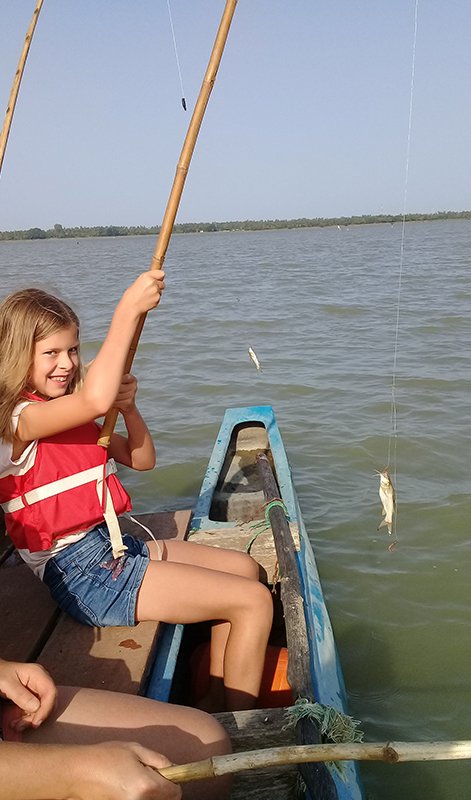
Our main base is sea trips from Nilaveli — reef, open sea, fishing, and a quieter lagoon option around Irrakkandy for mangrove and still-water days closer to our coast.
Kokkilai sits further north in a wider east-coast nature picture. Guests who want bird watching in Trincomalee sometimes combine lagoon interest with a Nilaveli stay. When that is realistic for your dates, we say so. When distance, season or access make it weak, we say that too. We do not sell a fixed “safari package” under our name for Kokkilai as if it were a daily product from our beach base.
What this page is not
Not a ranked “best of” list
Not a promise of flamingos or rare storks on every trip
Not a substitute for checking DWC or local access rules for your exact dates
Not a call to treat a sanctuary like an entertainment park
If you want clear information for your travel window, message us with dates. We will tell you what is workable from our side and what is better planned as a separate nature day.
FAQ
No. It remains a wildlife sanctuary under the Department of Wildlife Conservation, designated in 1951. It was not among the Northern Province sites upgraded to national park in June 2015.
About 1,995 hectares in current published lists.
Often roughly November to April. Confirm for your year — water level and season vary.
Usually no. Different direction and timing. Plan them as separate blocks.
No. Sightings depend on season and the day.
No. It is also a working lagoon with fisheries management designation (2015). Local use continues alongside protection rules.
Notes from Sas — Snorkeling in Nilaveli Islands, Nilaveli, Trincomalee.
Sanctuary facts drawn from public protected-area records (DWC administration, Fauna and Flora Protection Ordinance designation 18 May 1951, published area figures, 2014 ISEA recommendation, 2015 national park declarations, 2015 fisheries management gazette).
Explore more from our Nilaveli base →
Explore the quieter lagoon morning →
Or a land half-day in Trincomalee →
More local guides and stories from our content hub:
Pigeon Island Guides & Memories —
Angel Rock & Local Snorkeling —
Whale & Dolphin Stories —
Fishing Experiences —
Marine Conservation & Reef Protection —
Lagoon Nature & Practical Guides —
Local Stories & Trincomalee History —
Taste of Nilaveli —


