Pigeon Island, just off the coast of Nilaveli, is now known as one of the area’s special places for snorkeling and marine experiences. For visitors, it can be easy to see the island simply as a beautiful destination for a morning boat trip. But for local people from Nilaveli, the waters around the island carry memories that go much further back than modern tourism.
Some of these memories come from my own family, while others have been shared with me by local fishermen and elders who knew these waters when the area was very different from today.
Before we get to those memories, it helps to know the official story. Pigeon Island was first declared a sanctuary in 1963, and later re-designated as a national park in 2003 — the 17th national park in Sri Lanka — covering an area of around 471 hectares. Like much of this coastline, it was also affected by the 2004 Indian Ocean tsunami. These are the facts you’ll find in the official record. What follows is what the record doesn’t capture.
Whale & Dolphin Watching: Dedicated excursion trips to spot whales and dolphins off the coast of Trincomalee.
Fishing Tours: Deep-sea and shallow fishing tour options tailored for guests.
Eco-Tours & Sightseeing: Lagoon eco-tours and Trincomalee city sightseeing tour packages.
Memories From Difficult Years
During the years when tourism was limited because of the civil war, the sea around Pigeon Island was experienced very differently. My family remembers spending time around the coast and island, cooking, bathing and observing the sea without the modern snorkeling equipment visitors use today. There were no organised tourist snorkeling trips like those seen today — the sea was simply part of everyday life.
A Fisherman’s Memories, and a Clear Underwater World
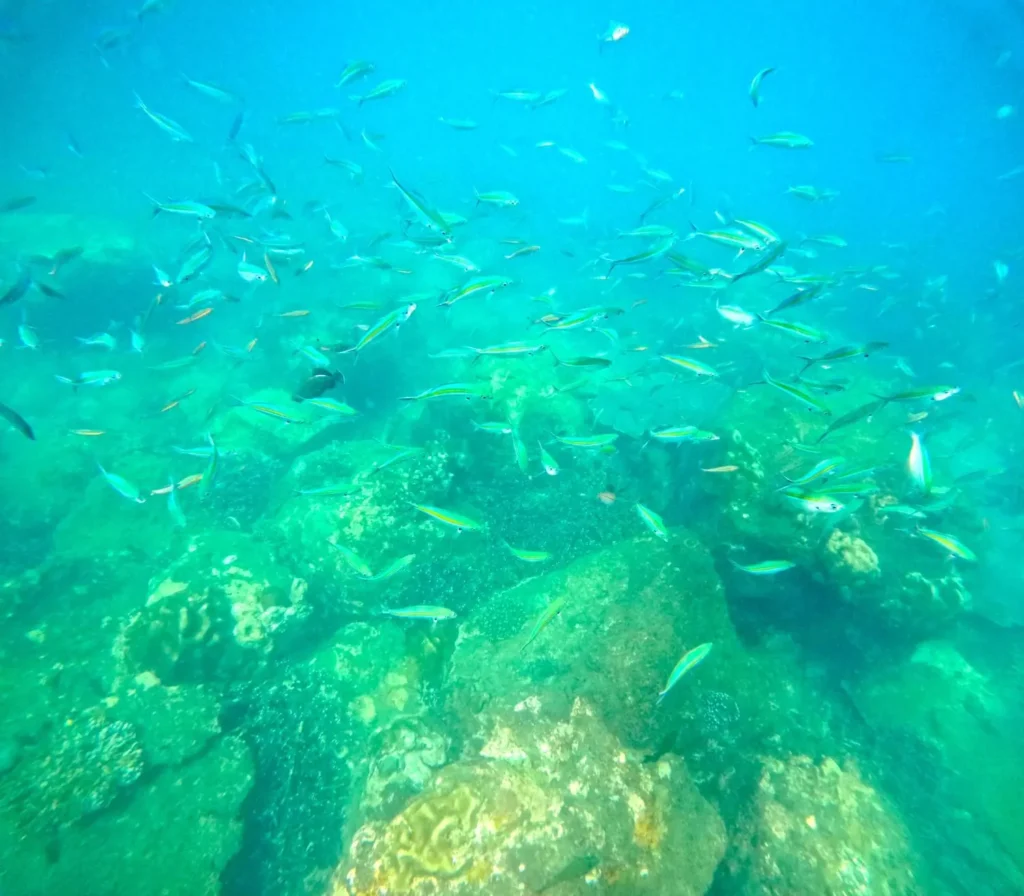
One local fisherman I know has known these waters since he was young. After the mid-1990s, he remembers going to Pigeon Island collecting paddy husk, at a time when only limited space existed for boats and the shoreline had a rough, natural character. While fishing, he used a simple glass to look into the water and remembers the sea being exceptionally clear — turtles, reef sharks, lobsters, and large groups of barracuda, four to six feet long. He describes it as feeling almost like a natural marine sanctuary, decades before the 1963 designation put that into official terms.
Old Structures and Forgotten Memories
There are also old structures around Nilaveli that have become part of local memories — a large old building with rooms and underground motor rooms, now unused with trees growing inside and bats living there, and four large concrete structures along the coastline whose original purpose still needs proper historical verification.
Pigeon Island Then and Now
Today, visitors come to Pigeon Island to enjoy snorkeling, clear water and marine life. The island is now protected as a National Park, and conservation is an important part of its future. For me, these memories are reminders that the sea around Nilaveli has its own history — one that started long before 1963, and will continue long after any of us.
Frequently Asked Questions
Parts of it are — the 1963 sanctuary designation, the 2003 national park status, and the 2004 tsunami are documented facts. The personal memories are oral history, shared as exactly that.
A mix of the author’s own family, local elders, and fishermen from Nilaveli.
Our guides are longtime local fishermen from this area, so there’s a good chance the person guiding your snorkeling trip has stories much like this one.
Local fishermen who’ve watched the reef for decades describe it as less vibrant than it once was in some areas, though healthy coral is still very much part of the experience today.
See the other blog posts linked from our Pigeon Island Snorkeling page.
Have a Question About the Reefs or Planning a Trip? Let’s Talk.
Whether you are curious about the marine life at Pigeon Island, looking for local advice on Trincomalee, or just want to share stories about the sea, I am always happy to chat. Feel free to reach out to me directly whenever you are ready.
Official Resource Link: Learn more on the Department of Wildlife Conservation, Sri Lanka official portal.


Pingback: Why I Care About Pigeon Island | A Microbiologist’s View on the Reef