A few seasons back, I watched a first-time snorkeler surface near the boat, pull her mask up, and ask, “Why does that fish keep biting the rock?” She’d been watching a parrotfish work its way along a coral head, and it genuinely puzzled her. I remember explaining it half-jokingly at the time, but it’s actually one of my favorite things to talk about — because that “biting” is one of the reasons this reef is still here for us to visit at all.
Studying microbiology gave me the underlying theory: grazing pressure, algal competition, nutrient cycling. But it took years of watching this reef, trip after trip, to really appreciate how these small, unglamorous fish are doing constant maintenance work that keeps the whole system standing.
The Parrotfish Doing the Heavy Lifting
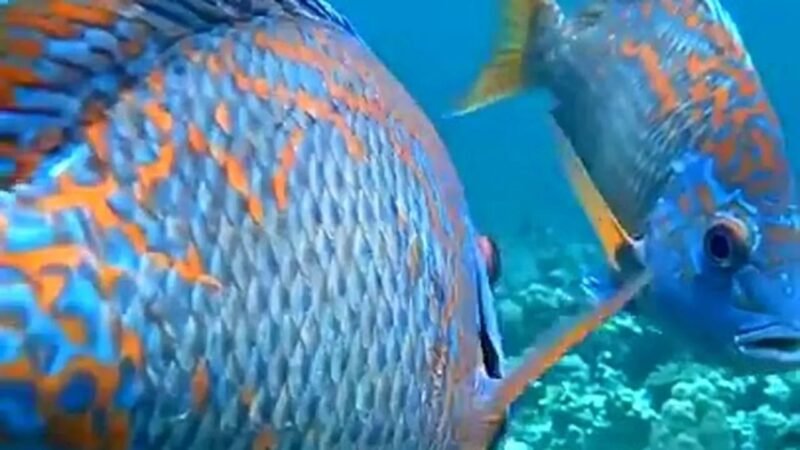
Parrotfish are, without much competition, the most important coral reef fish at Pigeon Island.
- Their beak-like mouths scrape algae and cyanobacteria films off coral and rock surfaces
- This grazing keeps surfaces clean enough for coral larvae to settle and grow — without it, algae quickly smothers the reef and coral has nowhere new to establish
- As they feed, parrotfish also grind small amounts of limestone, which they excrete as fine white sand — a real portion of the beach sand around Nilaveli has passed through a parrotfish at some point
- A reef without enough parrotfish tends to shift toward algae-dominated cover over time, which is one of the clearest early signs of a struggling reef system
It’s a strange thing to explain to visitors — that some of the sand under their feet on Nilaveli Beach was, technically, digested rock. But it usually gets a laugh, and it sticks with people far better than a lecture on reef ecology would.
The Supporting Cast
Parrotfish get most of the attention, but they’re not working alone.
- Butterflyfish feed on coral polyps and small invertebrates, helping regulate their populations
- Angelfish graze on sponges and algae in areas parrotfish don’t always reach
- Damselfish defend small algae “gardens” they cultivate, which — in a controlled way — actually helps limit algae from spreading unchecked elsewhere
- Clownfish, sheltering in sea anemones, add another layer to this balance through their own symbiotic relationship
Each species is handling a slightly different piece of the same job: keeping the reef surface clear enough, and the ecosystem balanced enough, for coral to keep growing.
Why This Matters More After a Bleaching Event
This is the part that connects most directly to reef resilience. Healthy populations of coral reef fish help a reef recover faster after bleaching or storm damage, because active grazing prevents algae from taking over bare coral skeletons before new coral polyps have a chance to settle. A reef with strong fish populations essentially has a built-in recovery crew. A reef that’s been overfished loses that advantage right when it needs it most.
Pigeon Island’s numbers reflect just how much is riding on this balance:
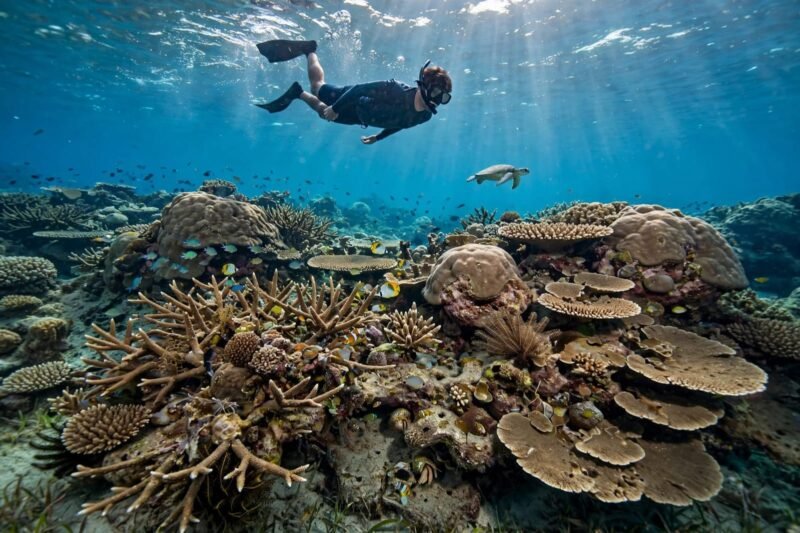
- Over 100 coral species have been recorded around the islands
- Nearly 300 species of reef fish live within this relatively small marine sanctuary
- This combination makes it one of the better-preserved reef systems remaining on Sri Lanka’s east coast
🏠 Back to Home Page
Discover more snorkeling, whale watching and boat trips from Nilaveli →
FAQs
They’re not eating the coral itself — they’re scraping algae and cyanobacteria off the surface, which incidentally removes a thin layer of limestone too.
Yes. Clean, algae-free surfaces are what coral larvae need to settle and begin growing, so grazing fish directly support new coral establishment.
Partly — parrotfish grind ingested coral and rock into fine sand as part of their digestion, and this contributes to beach sand over time.
The shallow lagoon, protected status, and healthy coral cover create ideal conditions for a wide range of species to coexist in a relatively compact reef system.
A Small Reminder Worth Passing On
Whenever I explain this to visitors now, I try to frame it the way it finally clicked for me — not as a textbook fact, but as something happening in real time, right under the boat. The parrotfish grazing past your fins isn’t just part of the scenery. It’s part of the reason the reef still looks the way it does.
If you’d like to see this in action for yourself, our guided snorkeling trips to Pigeon Island give you a close look at these fish at work, with a guide who can point out exactly what’s happening beneath the surface.
Book Your Pigeon Island Snorkeling Adventure: Ready to explore the crystal-clear waters and vibrant coral reefs? Secure your spot on our guided snorkeling tour today!


- A World Beneath the Waves: Marine Ecosystems in Plain Words
- Why the Sea Near Nilaveli Feels Cooler Than the Sand
- What to Bring for Snorkeling in Nilaveli
- Dolphin Watching Nilaveli from Local Guide: East-Coast Open Sea Mornings
- The History of Whale Watching in Trincomalee: Why Whales Keep Returning

Pingback: Amazing Nilaveli Snorkeling Guide: Pigeon Island Tour Secrets 2026
Pingback: Pigeon Island National Park Tour: What to Expect from Nilaveli
Pingback: Best Angel Rock Snorkeling Nilaveli: Ultimate Hidden Guide 2026
Pingback: Why I Care About Pigeon Island | A Microbiologist’s View on the Reef
Pingback: Angel Rock Snorkeling in Nilaveli: Early Tourism Memories
Pingback: Whale Dolphin Local Notes Nilaveli | Open-Sea Expectations