Planning your first trip to Pigeon Island from Nilaveli? This is the practical guide I give guests before we leave the beach — tickets, two different sides of the reef, sea conditions, safety, and what you can realistically expect in the water.
I am Sas. I organise sea days from this coast. Pigeon Island is a marine national park offshore from Nilaveli. It is not only a boat ride and a hope for turtles. The sea decides a lot: wind, waves, visibility and reef condition change from day to day. Wildlife is wild. We show what is there on your day. We do not promise a fixed list of animals.
Come as a guest. Leave as a friend.
Quick summary for first-timers
| Topic | Practical note |
| What it is | Marine national park — Large & Small Pigeon Island, reef around the larger island |
| How you go | Boat from Nilaveli coast; return same day |
| Time needed | About 2.5–3 hours all in |
| Usual start | Around 9:00 AM (sea can change the plan) |
| Park tickets | Separate government fee — foreigners roughly LKR 12,500–13,500 (2026); children under 11 about half (~6,500–7,000). Amounts can shift with tax/conditions — confirm before travel |
| Our full trip package | Currently LKR 19,500 per adult including park entry, boat, gear, guide, water, fruit, juice — full Pigeon Island trip details and booking |
| Two reef sides | Front = more open offshore feel; other side = calmer, deeper “pool-like” area with more live coral when you go a little deeper |
| Safety | Follow guide and park rules. Boat path, rocks, wind and sharp shell (kavatti) matter — real incidents happen when instructions are ignored |
| Wildlife | Possible: reef fish, coral, turtles, blacktip reef sharks — never guaranteed |
What is Pigeon Island National Park?
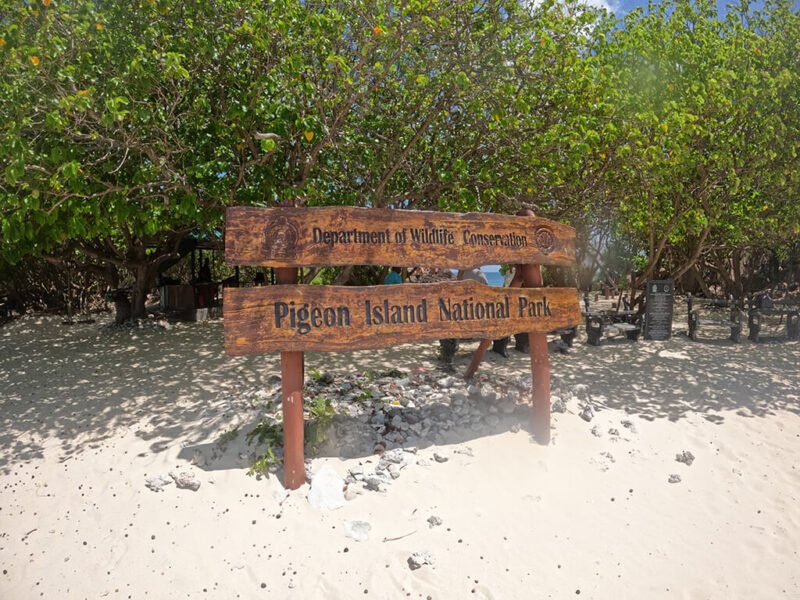
Pigeon Island sits just off the Nilaveli coast. The park includes Large Pigeon Island and Small Pigeon Island, with coral reef around the larger island.
Public tourism material often cites a wide range of coral and reef-fish species, with turtles and blacktip reef sharks linked to the shallow reef. I do not describe it to guests as an underwater aquarium. The reef is a living place. Some sections still hold interesting structure and life. Other sections have been damaged over years. One short swim does not represent the whole island.
For a deeper local view on why this reef still matters — marine life, coastal families, and careful visiting — see why the Pigeon Island reef still matters.
Two sides of the water — what first-timers should know
On a normal visit, guests notice that snorkeling does not feel the same everywhere around the island.
Front side
More like open, offshore snorkeling. After the 2025 monsoon, coral on parts of this side was broken and died. It is not “ruined forever,” but it is not the same as healthier patches. Still usable; still honest to say: mixed, not perfect.
Other side
Feels more sheltered — guests sometimes compare it to a large swimming pool. It is deeper. When you move a little further into that depth, you more often meet live coral and more marine life. Comfort and conditions still decide how far anyone should go.
We place people according to swimming ability and the day’s sea — not according to a photo from someone else’s trip.
Park entrance tickets (2026 — confirm before you travel)
Pigeon Island is a national park. The entrance fee is a government charge, separate from “just the boat.”
In the 2026 season, foreign adult park entry has been in the region of LKR 12,500 to 13,500 per person. It can move a little day to day with tax and official conditions. Children under 11 are typically about half — roughly LKR 6,500 to 7,000. These figures are park tickets only, not a full tour package.
Ticket counters have operated from points such as near Nilaveli Beach Hotel and the public beach at Gopalapuram. Most complete tour prices you hear from operators already include park tickets inside the package.
Important: Counters commonly open around 8:30 AM. Guests who want a smooth early start often pay in advance so a guide can collect tickets while they prepare gear at our place — less queue, faster departure when the group is ready. Sea conditions still come first.
Government fees change. Do not rely on an old blog or social post. Ask us for the current amount on your date.
Our current full trip price (what guests actually pay us)
For the complete Pigeon Island snorkeling trip we organise from Nilaveli, the current adult price is:
LKR 19,500 per person
Typically includes:
- National park entrance
- Return boat
- Snorkeling equipment
- Guided local team
- Water, fruit, fresh juice
- No hidden extras on the standard package
Children: under 11 — LKR 12,000; under 5 — LKR 5,000 (confirm when booking).
Groups of about 1–4 often share a boat; larger groups may use a private boat. Family/group rates can apply.
Full package, timing and booking stay on the commercial page: Pigeon Island snorkeling tour. This guide is for understanding the day — not a second sales page.
How long, and when to go
Allow about 2.5–3 hours for boat, time at the island and snorkeling.
We often aim near 9:00 AM. Morning can be quieter and visibility sometimes better — it is not a guarantee of perfect water. Main east-coast snorkeling months are generally calmer periods around May–September, but wind, rain, waves and lower visibility can still appear in “peak” weeks. We check the sea rather than sell a calendar.
For the shorter local reef trip (not the national park island day), early starts are often discussed in our notes on why 6:30 can suit Angel Rock. That advice belongs to Angel Rock timing — Pigeon Island runs on its own park and boat rhythm.
What you may see — and what we will not promise
Possible on a good day:
- Reef fish and coral
- Sea turtles
- Blacktip reef sharks
- Other reef life in shallow areas
Possible is not promised. A turtle five metres away one morning can be absent the next. Fish move. Sharks move. We report what the water holds on your day.
Safety — why we insist on instructions
Safe snorkeling is not a slogan. It is how people go home well.
Boat path
In August 2026, during peak season, a 16-year-old Italian guest was hurt while snorkeling because she did not move slowly and carefully in the area where boats approach. We treat the boat pathway as a serious zone. Guests must follow the guide’s instructions on where to swim and when to stay clear.
Rocks and kavatti
At Angel Rock in 2025, on a windy day, a 17-year-old girl went too close to the rocks. The sharp shell-like surface (kavatti) cut her badly. First aid was given; she was taken to hospital; she recovered. Wind + rock edge + ignoring distance = real risk. The same respect for hard edges and guides applies on any reef trip from this coast, including Pigeon Island.
What I tell every guest
You are a visitor in Sri Lanka. Careful behaviour is not only “for the operator.” If you are injured, the day collapses for you — and often for family or friends travelling with you. Follow the guide. Follow wildlife and park instructions. There is no prize for pushing past a warning.
We care about customers by insisting on safe snorkeling, not by pretendingthe sea is soft everywhere.
the sea is soft everywhere.
- Never stand on coral — float or move to sand.
- Do not touch coral — look only.
- Do not chase turtles or sharks — they choose the distance.
- Do not grab fish, turtles or coral pieces.
- Follow the guide when they move you away from an area.
- Take all rubbish back with you.
- Stay out if conditions are unsuitable — postpone is sometimes the right call.
See the reef. Respect the reef. That is part of why the national park exists — and part of why the Pigeon Island reef still matters beyond a single swim.
First-time snorkelers
You do not jump straight into deep water on arrival. We look at sea conditions and your comfort. Confident swimmers, shallow-only guests and complete beginners are not the same plan. Say if you are unsure. Listening before you enter matters more than looking experienced.
What to bring
Swimwear, towel, sun protection, hat, waterproof phone/camera if you use one, change of clothes. Main snorkeling gear and included refreshments come with our trip.
If the weather changes
A date on paper does not control the sea. If wind, waves or visibility make the trip unsuitable, we may postpone. Better a changed day than a forced run in bad conditions. Refund or reschedule follows the terms you agreed at booking.
Families
Possible with serious supervision. Tell us children’s real swimming ability before the water — pool confidence is not the same as open sea. We explain conditions first.
Pigeon Island is not only snorkeling
Older people around Nilaveli still connect the name with pigeons and the agricultural land nearby, including paddy. I share that as local memory, not as a dramatic historical claim. Nilaveli is easier to understand through people who live and work here.
Pigeon Island vs Angel Rock
Pigeon Island is a national park visit — park entry is part of the cost, fuller reef/island time, about three hours.
Angel Rock is a shorter local snorkeling run without that park ticket, more focused on time in the water from the boat.
Neither is automatically “better.” They fit different days. Read the full practical comparison: Pigeon Island or Angel Rock — which trip fits you.
Before you book
This guide is for first-timers who want clear facts.
Booking and current package detail: Pigeon Island snorkeling tour
Tell us on WhatsApp: date, number of guests, swimming confidence or first-time snorkelers. We explain conditions and tickets for your day before you decide.
We do not guarantee turtles.
We do not guarantee sharks.
We guarantee honest information about the sea and careful practice in the water.
Come as a guest. Leave as a friend.
Frequently Asked Questions
No. Government amounts can move slightly. Foreign adult entry in 2026 has been about LKR 12,500–13,500; children under 11 about half. Confirm for your date.
Park ticket counters often open around 8:30. Advance payment lets a guide collect tickets while you prepare gear, so the group is not stuck in a long queue.
Parts were damaged after the 2025 monsoon. Other areas, including deeper sections on the more sheltered side, still hold live coral and life. We describe what you are likely to meet that day — not a fantasy reef.
No.
That is how people get hurt. We stop unsafe behaviour when we see it. Guests must follow instructions.
Explore our Nilaveli base →
Book the Pigeon Island snorkeling trip →
Shorter local reef option — Angel Rock →
More from our content hub:
Pigeon Island Guides & Memories —
Angel Rock & Local Snorkeling —
Whale & Dolphin Stories —
Fishing Experiences —
Marine Conservation & Reef Protection — /
Lagoon Nature & Practical Guides —
Local Stories & Trincomalee History —
Taste of Nilaveli —


Pingback: Best Time for Whale and Dolphin Watching in Nilaveli | Season Guide